The Rise of AI-Native Real Estate Operations on Salesforce - Part 8
The next transformation in real estate technology will not come from CRM automation.
It will come from AI-native operations.
For years, CRM systems helped organizations digitize processes. Leads were captured automatically. Sales pipelines became visible. Reports could be generated with a few clicks.
But these systems still depended on human-driven decision making.
Sales managers decided which leads to prioritize.
Call center agents decided when to follow up.
Marketing teams decided which campaigns to optimize.
Artificial Intelligence is beginning to change this dynamic.
From Data Storage to Intelligent Systems
Modern Salesforce ecosystems are evolving into AI-powered operational platforms.
Instead of simply recording activities, systems can now:
- Analyze lead behavior patterns
- Predict conversion probabilities
- Trigger automated follow-ups
- Recommend next best actions for sales teams
This transition marks a shift from CRM automation to intelligent revenue orchestration.
Why Real Estate is Perfect for AI
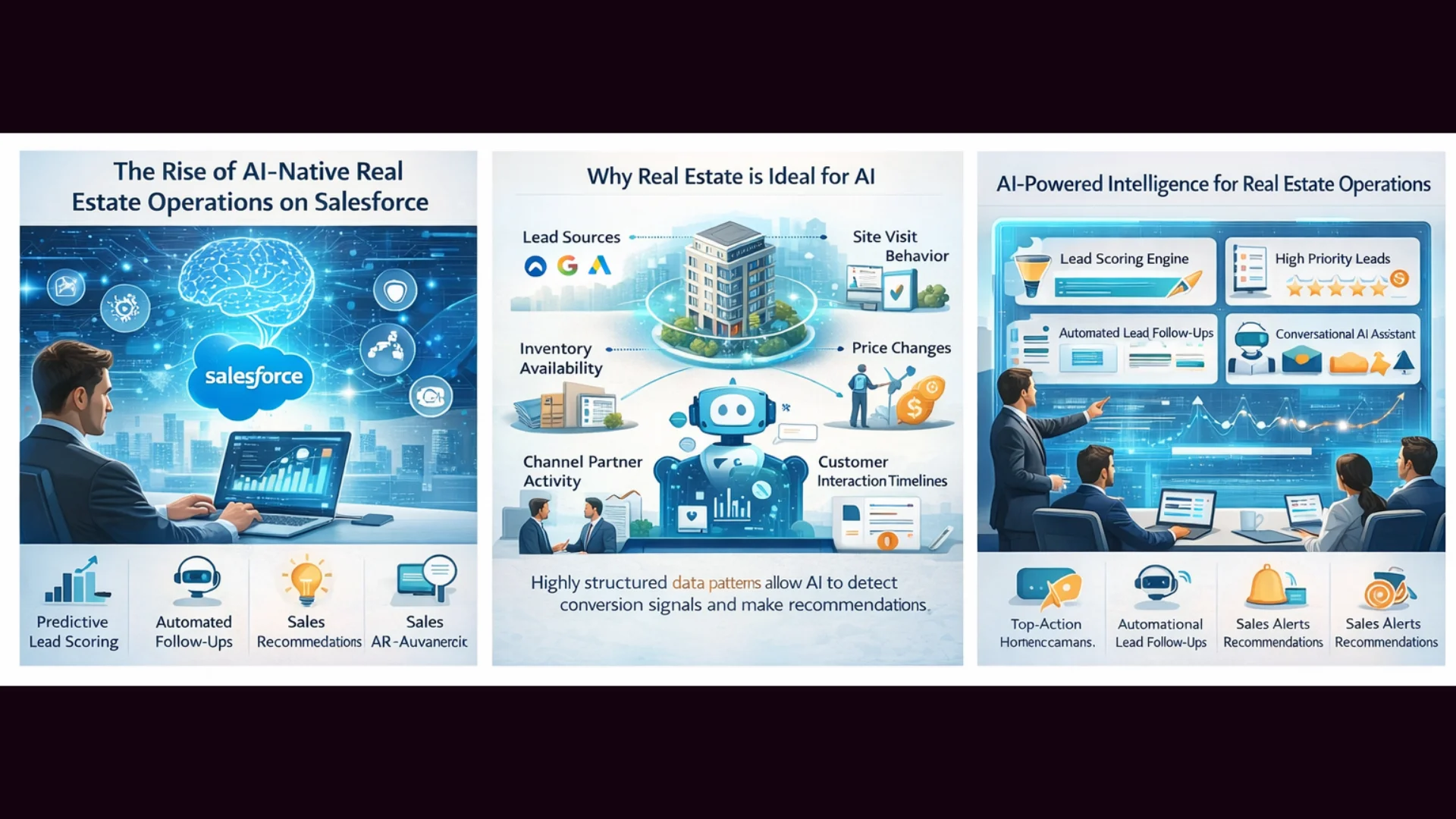
Real estate sales involve highly structured data patterns:
- Lead sources
- Site visit behavior
- Inventory availability
- Price changes
- Channel partner activity
- Customer interaction timelines
These patterns create ideal conditions for AI models to identify conversion signals and decision triggers.
For example:
An AI model can detect that leads who take a site visit within 48 hours of inquiry convert at significantly higher rates.
The system can then automatically prioritize similar leads for immediate follow-up.
AI-Powered Lead Intelligence
One of the most powerful use cases lies in lead prioritization.
Most developers generate thousands of leads per month.
Yet only a fraction receive meaningful engagement.
AI models can analyze:
- Source quality
- Interaction frequency
- Communication patterns
- Visit behavior
- Budget signals
The result is a lead scoring engine that dynamically ranks prospects based on conversion likelihood.
Sales teams stop chasing every lead.
They focus on the right leads.
Conversational AI and Pre-Sales Automation
Another major shift is the rise of AI-driven customer engagement.
Conversational AI systems can now:
- Respond to inquiries instantly
- Qualify prospects
- Schedule site visits
- Provide project information
- Capture customer preferences
This dramatically expands the operational bandwidth of pre-sales teams.
Instead of handling repetitive inquiries, human teams focus on high-intent prospects and closing conversations.
The Future: Agentic AI in Real Estate
The next frontier is agentic AI systems — AI agents that can take actions autonomously.
These systems will be capable of:
- Identifying high-value leads
- Triggering follow-ups
- Scheduling calls
- Updating CRM records
- Alerting sales managers about opportunities
Salesforce is rapidly evolving toward this agent-driven enterprise model.
For real estate developers, this means the CRM will become an active participant in revenue generation, not just a passive system.