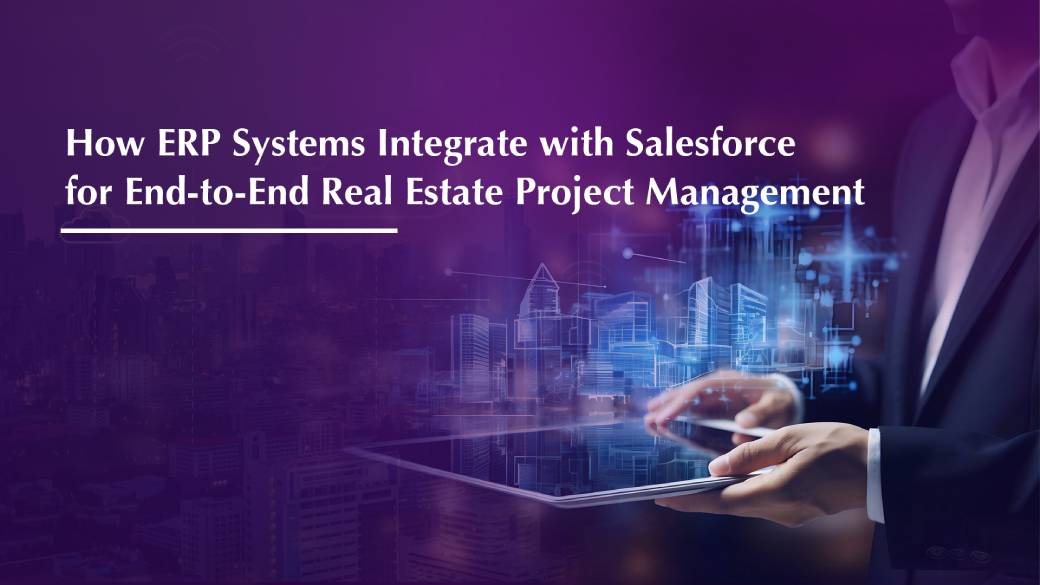
How ERP Systems Integrate with Salesforce for End-to-End Real Estate Project Management
Managing a real estate project is like conducting an orchestra; every department, from sales to finance to construction, needs to stay in perfect rhythm. But too often, these teams work in isolation, on separate systems, leading to confusion, delays, and lost efficiency.
That's where integrating ERP systems with Salesforce changes the game. It connects your back-end project operations with front-end sales and customer management, creating one seamless, intelligent ecosystem.
Understanding ERP and Salesforce Made Simple
ERP (Enterprise Resource Planning): Manages internal operations like budgets, billing, construction progress, and inventory.
Salesforce CRM: Handles sales, leads, brokers, and customer relationships.
When these two systems work together, you bridge the gap between what's happening on-site and what's happening in sales.
Why Integration Matters in Real Estate
1. Real-Time Project Updates
No more chasing reports or waiting for Excel updates. Leadership gets instant visibility into sales numbers, payment status, and site progress, all in one dashboard.
2. Seamless Lead-to-Booking Flow
When a booking is confirmed in Salesforce, it automatically updates in ERP, syncing inventory, invoices, and payment schedules. No duplicate work. No errors.
3. Better Financial Clarity
As payments are received, ERP pushes updates back into Salesforce. Sales teams always know who's paid, who's due, and when to follow up.
4. Connected Teams
Construction, finance, sales, and marketing all operate from the same live data, enabling faster, more informed decisions.
5. Happier Customers
Automated updates on project status, payments, and possession timelines build transparency and trust, the foundation of long-term loyalty.
A Real-Life Example
Imagine a buyer books a flat:
- The booking reflects instantly in both Salesforce and ERP.
- ERP updates inventory and generates the invoice automatically.
- Salesforce triggers a confirmation email or WhatsApp update to the buyer.
Everything happens in sync, no manual entries, no delays, no miscommunication.
The Advantages for CXOs and Developers
For leadership, ERP-Salesforce integration means:
- Clarity: One reliable source of truth across departments
- Speed: Data-backed decisions, faster execution
- Accuracy: Fewer mismatches, fewer errors
- Efficiency: Less manual effort, more automation
Conclusion: ERP + Salesforce = The Future of Real Estate Project Management
An ERP helps you manage your projects and finances.
Salesforce helps you manage your sales and customers
When you integrate the two, you create a system that's connected, intelligent, and built for growth.
For modern real estate businesses, ERP + Salesforce isn't just integration, it's orchestration.
The harmony that keeps every function in tune and every project on track.