Integrating the Real Estate Tech Stack: Why CRM Alone Is Not Enough - Part 9
While CRM platforms sit at the heart of modern real estate technology, they cannot operate in isolation.
A developer’s technology ecosystem today includes:
- Digital marketing platforms
- Lead generation portals
- Call center systems
- WhatsApp communication tools
- Inventory management systems
- Payment gateways
- Construction management tools
- Customer service platforms
If these systems operate independently, organizations end up with data fragmentation and operational inefficiencies.
The real challenge is not implementing CRM.
The real challenge is integrating the entire ecosystem.
The CRM-Centric Technology Stack
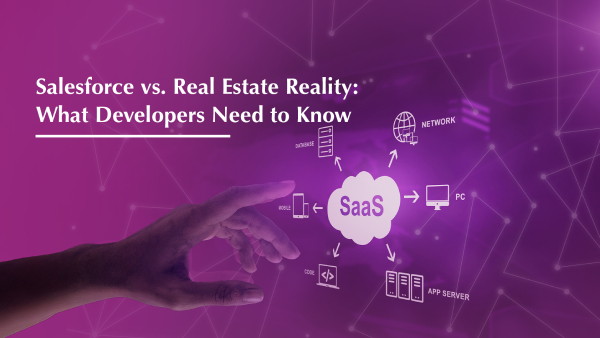
In a mature architecture, Salesforce becomes the central operating layer connecting multiple systems.
For example:
Digital marketing platforms push leads directly into CRM.
Call center systems log conversations automatically.
WhatsApp interactions are recorded within the customer timeline.
Payment systems update booking and transaction status.
Customer apps sync post-sales engagement data.
This creates a fully connected operational framework.
Why Integration Complexity Is Often Underestimated
Integration is not merely a technical challenge.
It requires understanding:
- Data ownership
- Process dependencies
- User workflows
- Cross-department coordination
Generalist partners often implement point integrations without designing the broader technology architecture.
Over time, this creates fragile systems that require constant maintenance.
The Role of Domain-Led Integration Strategy
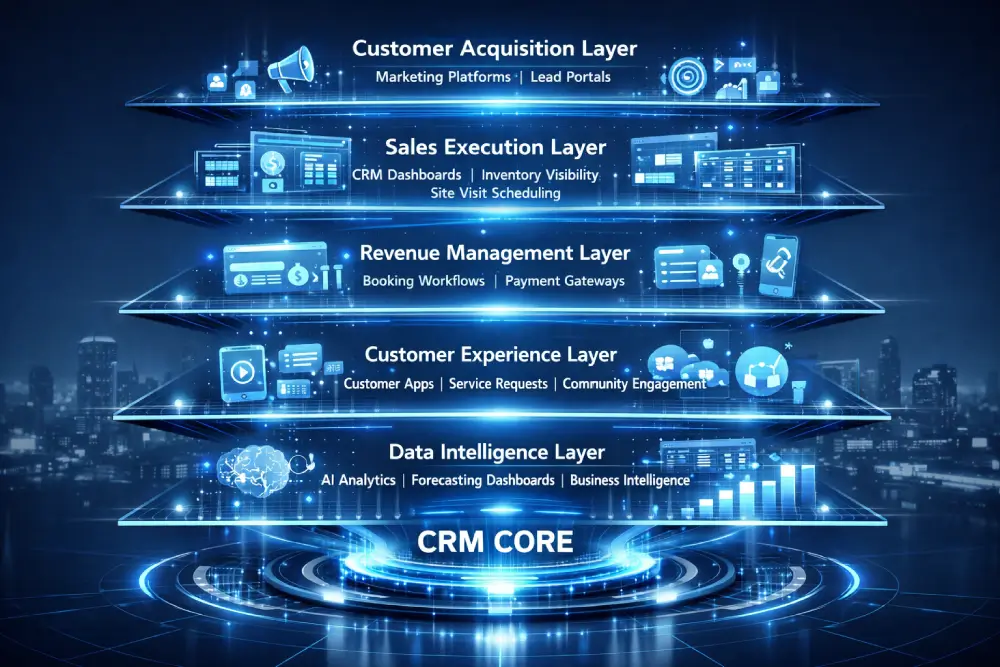
A domain-focused Salesforce partner approaches integration differently.
Instead of connecting systems reactively, they design a structured technology stack for real estate operations.
Key layers include:
1. Customer Acquisition Layer
Marketing automation, lead sources, campaign tracking
2. Sales Execution Layer
Lead management, inventory visibility, site visit scheduling
3. Revenue Management Layer
Booking workflows, payment tracking, documentation
4. Customer Experience Layer
Customer apps, service requests, community engagement
5. Data Intelligence Layer
Analytics dashboards, forecasting, business intelligence
When these layers operate together, Salesforce becomes the control tower of the developer’s business.